“Do I really need LinkedIn if I already have a website?”
This is a common question among business owners and professionals. Some see LinkedIn as an online CV used mainly by job seekers. Others create a profile, add their qualifications and employment history, and then leave it untouched for months or even years.
Its value extends well beyond job searches. Used strategically, LinkedIn can build credibility, expand your network and keep you visible to potential clients.
For service-based businesses, this is particularly important. People are not only evaluating the service being offered; they are also evaluating the professional they may have to trust.
What Is LinkedIn Really For?
LinkedIn is a professional networking platform. It allows you to present your experience, skills and services while connecting with clients, colleagues, referral partners and other people in your industry.
In plain language, your LinkedIn profile is a professional introduction that people can find online.
It can help someone quickly understand:
- Who you are
- What you do
- Who you help
- What experience you have
- What makes your approach valuable
- How they can contact or learn more about you
A strong profile should therefore do more than list previous positions. It should communicate your current professional value clearly.
LinkedIn is also a relationship-building platform. Its greatest value often comes from making relevant connections, sharing useful insights and building familiarity over time—not sending constant sales messages to strangers.
LinkedIn Helps Build Professional Credibility
Before contacting a professional or service provider, many people search for them online. A clear, complete and professional LinkedIn profile can reinforce the impression created by a website, referral or initial conversation.
Your photograph, headline, summary, experience, qualifications and recommendations help people assess whether you are relevant to their needs.
Recommendations are especially valuable because they provide social proof. A positive recommendation from a client or colleague can support the claims you make about your work and show that other people have had a good experience with you.
Credibility still depends on accuracy and consistency. An impressive headline cannot compensate for vague information, an outdated role or unsupported claims.
LinkedIn Increases Your Professional Visibility
Having the right expertise is important, but people cannot consider you if they do not know you exist.
LinkedIn gives professionals a way to remain visible by sharing useful content, commenting thoughtfully on relevant discussions and engaging with people in their network. Each useful interaction gives others another opportunity to recognise your name and understand your area of expertise.
This does not mean posting every day. Consistent, relevant activity is more valuable than frequent content with no clear purpose.
You might share:
- Practical advice related to your industry
- Answers to questions clients frequently ask
- Lessons or observations from your professional experience
- Business updates and milestones
- Articles published on your website
- Comments on important developments in your field
Over time, this can position you as a knowledgeable professional and keep you visible to people who may need your services later.
LinkedIn Supports Relationships and Referrals
Many professional opportunities begin with a relationship rather than an advertisement. A colleague may recommend you, a connection may make an introduction, or someone who follows your content may contact you when a need arises.
It can also support referral partnerships between professionals who serve similar clients without competing directly.
The important point is that connections alone are not a pipeline. A large network has limited value if there is no genuine engagement, clear positioning or follow-up. Quality and relevance matter more than simply collecting names.
LinkedIn Can Help Drive Interest to Your Website
LinkedIn should not replace your business website. The two platforms serve different but complementary purposes.
Your LinkedIn profile introduces the professional behind the business and supports networking, conversation and visibility. Your website provides a space you control where visitors can explore your services, read detailed information, view your work and take a clear next step.
You can publish an article on your website and share it on LinkedIn. LinkedIn helps it reach people, while your website gives interested readers more information.
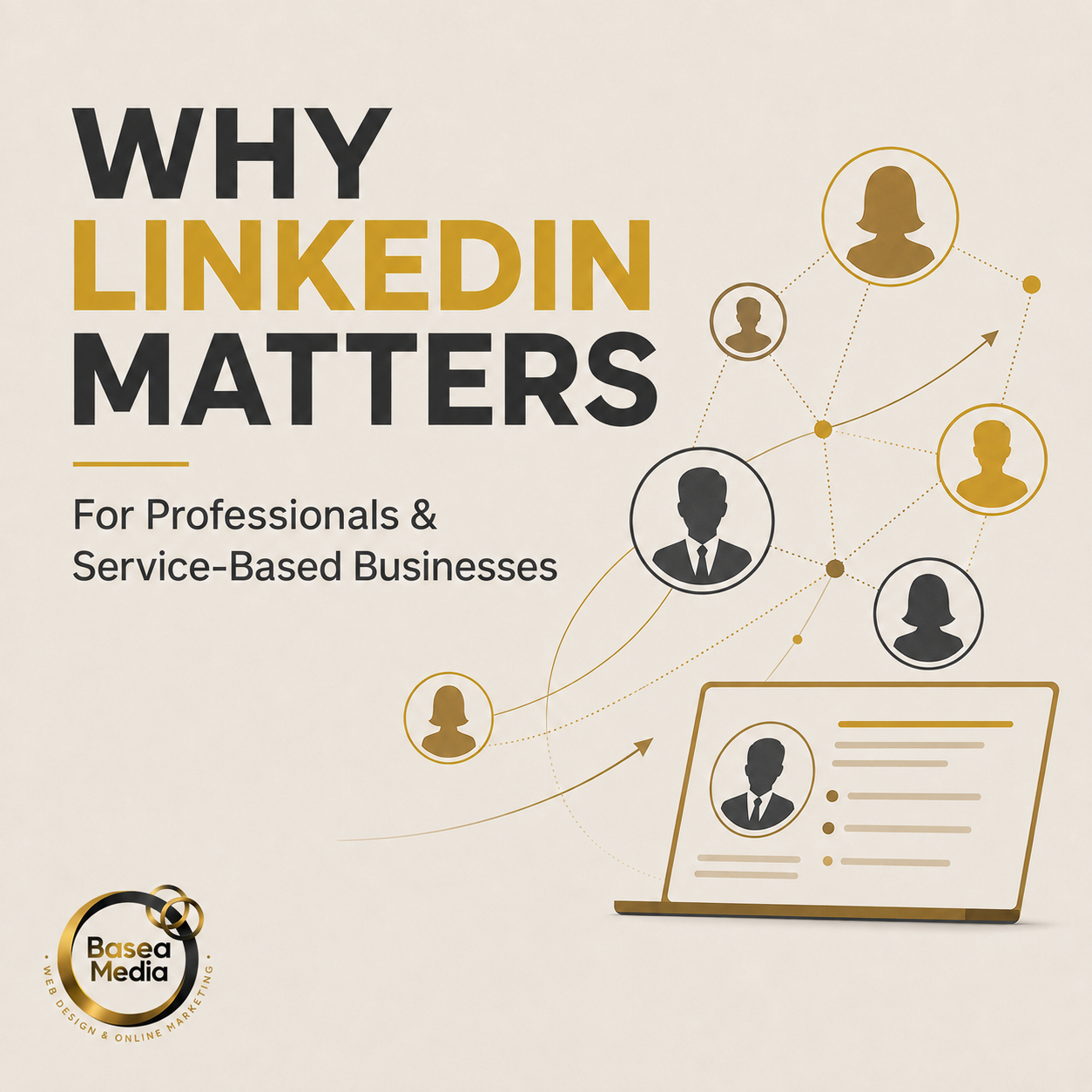
This creates a simple path:
- A person sees your LinkedIn post or comment.
- They visit your profile to learn more about you.
- They follow the link to your website.
- They review your services, articles or contact details.
- They enquire when they are ready.
LinkedIn Is One Part of a Stronger Online Presence
No single platform should carry your entire online presence.
A website provides detailed information. A Google Business Profile supports local discovery. Email marketing keeps you in contact with subscribers. LinkedIn builds professional visibility and relationships.
These channels become more effective when they present a consistent message. Your name, professional photograph, business description, services, contact details and visual identity should align across them.
If your website describes one speciality while LinkedIn presents another, potential clients may become uncertain about what you actually do. Consistency makes your business easier to understand and trust.
Practical Ways to Improve Your LinkedIn Presence
You do not need to overhaul everything at once. Start with the essentials below, then use the LinkedIn Profile & Visibility Checklist to assess your current presence and identify the area that needs the most attention.
- Use a professional, current photograph. Choose a clear image that reflects how you want clients and colleagues to see you.
- Write a specific headline. Go beyond a job title by explaining your area of expertise or the people you help.
- Strengthen your About section. Clearly describe what you do, who you serve and the value you provide.
- Update your experience and contact details. Remove outdated information and make the next step easy.
- Add relevant proof. Include qualifications, featured work, articles, achievements and genuine recommendations.
- Connect with purpose. Prioritise clients, peers, referral partners and people relevant to your professional goals.
- Be consistently useful. Share or comment on content that demonstrates your knowledge without turning every interaction into a sales pitch.
- Review the full journey. Check what someone sees when they move from your profile to your website or other business channels.
LinkedIn does not create instant trust or guarantee enquiries. It works best as a long-term professional asset supported by clear positioning, consistent activity and a credible wider online presence.
Download the LinkedIn Profile & Visibility Checklist
To help you put these recommendations into practice, Basea Media has created a free one-page LinkedIn Profile & Visibility Checklist.
It covers your profile foundation, credibility, visibility habits and the path from LinkedIn to your website or contact details. A quick scoring guide helps you choose your next priority.
If your LinkedIn profile no longer reflects your experience, services or professional direction, Basea Media can help you optimise it and align it with your website and broader digital presence.